

How Georgia Physicians are Growing Their Practices with 24/7 Answering Services
Think about a patient calling for help at midnight using our telecommunication systems, only to hear a message that doesn’t lead to anyone. Frustrating, right? This highlights the importance of effective communication strategies. In Georgia’s tough healthcare industry, clear communication is very important. Learn how 24/7 answering services help doctors stay in touch with patients and expand their practices. These services greatly improve patient satisfaction and boost professional reputation. Find out how their influence is changing things and see how Georgia doctors are leading.
Summary of Healthcare and Assistance Services in Georgia
Georgia’s healthcare system serves over 10 million residents, with a focus on improving patient access and satisfaction through healthcare solutions and innovations.
The state boasts approximately 60 hospitals and 30,000 healthcare providers, yet challenges remain. For instance, there is a growing demand for mental health services, reflected by a 20% increase in requests over the past two years.
Telehealth use, an important part of healthcare technology, has grown, now accounting for 15% of all outpatient visits, which helps people in rural areas access healthcare. Projects like the Georgia Global Health Alliance work to improve how providers are trained and to widen insurance coverage, aiming to create a healthcare setting that responds better to people’s needs.
Importance of Patient Communication
Clear and timely communication can increase patient satisfaction by up to 25%, directly influencing retention and referrals.
Clear communication in healthcare means using tools like SBAR (Situation, Background, Assessment, Recommendation) to make sure all important information is shared during important situations.
Regular training sessions for staff on empathy and active listening can significantly improve patient interactions.
Using electronic health record (EHR) systems that allow updates as they happen can improve teamwork among healthcare providers and cut down on mistakes.
Encouraging open feedback lets patients express their worries, building trust and enhancing results.
What is a 24/7 Answering Service and Its Role in Patient Outreach?

A 24/7 answering service gives continuous help to handle patient questions, schedule appointments, and deal with emergencies effectively, enhancing patient engagement and service reliability. If you’re interested in exploring the best options for such services, you might find our guide on the top AI answering services for Georgia healthcare providers insightful.
Definition and Functionality
These services handle incoming calls, appointment scheduling, and provide critical information, ensuring no patient inquiry goes unanswered.
The core functionalities of 24/7 answering services include live call handling, message relay, and patient triage.
For healthcare offices, services like Answering Service Care give customized options, while Ruby and PATLive offer training focused on medical needs for their agents.
These services help healthcare providers maintain superior patient communication and reduce missed appointments. Using automatic systems to remind people about appointments can make processes run more smoothly.
By using these solutions, patient satisfaction increases and the practice runs more smoothly, allowing healthcare workers to spend more time caring for patients.
Types of Answering Services Available
Doctors have the option to pick from specialized medical answering services, general answering services, and mixed models that suit their requirements.
Medical answering services specialize in managing healthcare inquiries and offer options like secure messaging and adherence to HIPAA regulations, making them ideal for practices needing confidentiality. Explore our detailed guide on Georgia Doctor Answering Service to understand the comprehensive support available for medical professionals.
General answering services provide wide-ranging help and basic message-taking, making them a good fit for small practices with limited patient contact.
Hybrid models combine elements of both, allowing flexibility and customization for larger practices.
For instance, a specialized service like Answering Service Care can cater to medical professionals with its 24/7 support, while a general service might suffice for solo practitioners just starting out.
Benefits of 24/7 Answering Services for Physicians

Having a 24/7 answering service can bring great advantages, such as happier patients and smoother operations, improving service efficiency and workflow optimization. Worth exploring: Physician Answering Service in Georgia
Improved Patient Satisfaction
Studies show practices utilizing professional answering services report a 30% rise in patient satisfaction scores due to reduced wait times.
For example, a dental practice in Austin switched to a 24/7 answering service and saw a 40% increase in new patient inquiries within three months. Patients reported feeling valued when someone was available to address concerns outside of regular office hours.
Implementing tools like Ruby Receptionists or AnswerConnect provides immediate access to trained professionals who can manage scheduling and queries. This proactive method decreases missed calls and builds loyalty, leading to more patients staying with the practice.
Increased Appointment Scheduling
Medical practices that use answering services experience a 20% rise in appointment bookings because patient calls get answered quickly.
Services like Ruby or AnswerConnect make sure potential clients get help right away, which lowers the chance of missing out on connections.
For instance, Ruby claims a 98% call answering rate, which means fewer patients feel neglected or turn to competitors. Combining these services with tools like Calendly or Acuity can make follow-ups and confirmations simpler and faster.
Practices can increase participation by sending SMS messages to remind patients to confirm their appointments, which helps keep more patients returning.
Improved Professional Image and Service Quality
A professional answering service can improve how a medical practice is seen, build trust with patients, and help keep them coming back.
Answering patient calls quickly shows that these services are dependable and easy to reach, which are important for patient satisfaction and practice profitability.
For instance, using a service like Answering Legal, which specializes in legal and medical sectors, can provide HIPAA-compliant communication at all hours. This guarantees patients that their personal information is safe and shows a promise to provide good care.
Features like call forwarding and appointment scheduling can make tasks easier, allowing doctors to spend more time caring for patients instead of handling administrative calls.
How Georgia Physicians Are Implementing These Services
Doctors in Georgia are using 24/7 answering services, which helps them communicate better with patients and grow their practices.
Case Studies of Successful Practices and Business Growth
Practice A, a family medicine clinic in Atlanta, experienced a 35% increase in patient retention after integrating a 24/7 answering service.
To achieve the same results, Practice A used AnswerConnect, which offered 24/7 support with a team of medical professionals experienced in managing patient questions correctly.
They integrated the service with their scheduling software, enabling seamless appointment bookings and enhancing healthcare accessibility.As a result, patients reported higher satisfaction levels due to reduced wait times and improved communication.
Implementing call tracking software allowed Practice A to monitor call volumes and patient feedback, further refining their services. This complete method improved patient retention and brought in 20% more new patients.
Choosing the Right Service Provider
Selecting an answering service involves evaluating providers based on experience, technology, patient communication strategies, and service customization.
Begin by asking specific questions like:
- How many years have you been in the industry?
- What technologies do you use for call logging and tracking?
Think about how well they work with your current systems to improve how smoothly communication happens. Check their scripts and train staff to show they understand and care, especially in healthcare settings. Ask for case studies or references to see how they handle different situations.
This thorough approach will guide you to a provider that aligns with your operational needs and patient care objectives.
Challenges and Considerations

Although 24/7 answering services offer benefits, using them can present difficulties that healthcare providers need to handle with care, ensuring service responsiveness and operational support.
Cost Implications and Service Scalability
Monthly costs for answering services range from $200 to $1,000, depending on service level and call volume.
Basic plans typically provide call answering during business hours, while premium options may include 24/7 coverage and additional features like live chat support.
For example, a service charging $300 per month could allow for 100 calls, providing excellent ROI if those calls translate into sales. Conversely, a $750 plan might offer unlimited calls and expand lead generation opportunities, but you’ll need to assess how many leads convert to customers to justify the investment.
Tracking metrics can help determine the best balance between cost and service level to suit your needs.
Maintaining Personal Touch
Research shows that 70% of patients prefer when communication is tailored to their personal needs, so it’s important to make interactions with patients more personal.
To maintain this balance while using answering services, think about using some important methods, such as local SEO and improving your online presence.
Begin by teaching your answering service about patient history and preferences to build familiarity. Use a customer relationship management (CRM) tool such as Salesforce Health Cloud to record interactions and customize follow-ups.
Make sure to set specific times for live staff to handle more delicate conversations, ensuring that patients feel heard and valued. By combining technology with a focus on personal attention, you can keep strong relationships without losing productivity.
Healthcare Communication Trends Ahead
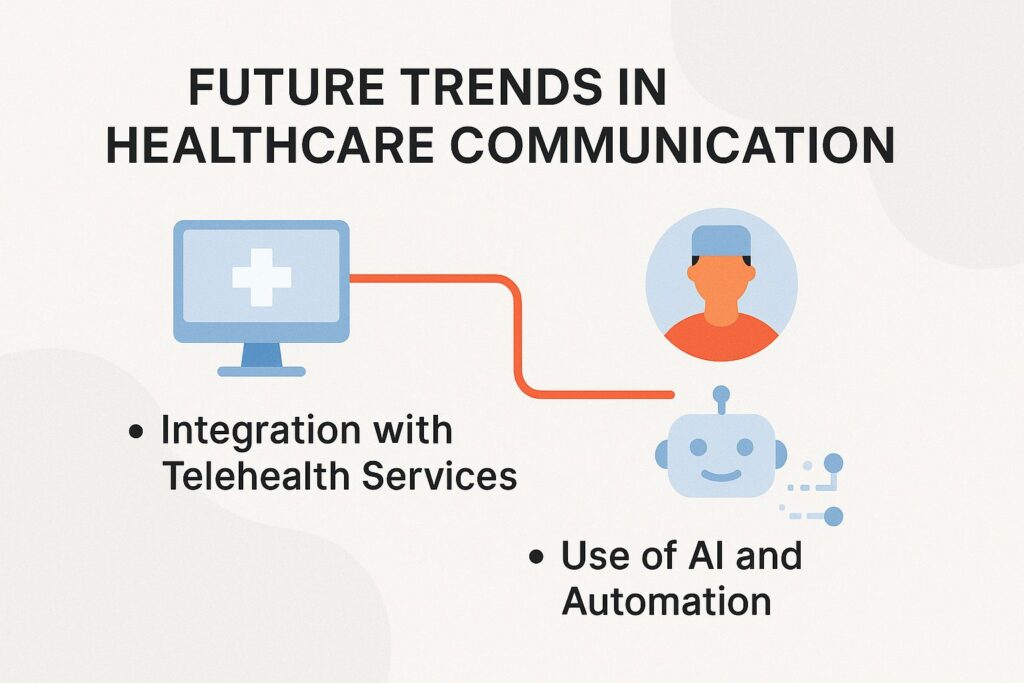
Bringing technology into healthcare communication and healthcare support will change how patients talk with their doctors, especially as telehealth becomes more common.
Integration with Telehealth Services
Using telehealth together with 24-hour service and round-the-clock answering services can make patient care more efficient and improve the quality of service availability.
Integrating telehealth and answering services can significantly improve patient engagement and satisfaction. For example, an answering service like Answering Service Care offers call center help that can respond quickly to patient questions, ensuring patients don’t feel ignored, especially after regular office hours.
Using this with telehealth platforms like Doxy.me allows staff to quickly arrange appointments and send notifications. Beyond simply answering calls, these services can collect preliminary patient information, thereby enhancing the telehealth experience and reducing waiting times during virtual visits, which improves operational efficiency.
Use of AI and Automation
AI-powered answering services can reduce response times by up to 50%, significantly enhancing patient engagement and patient follow-up.
In healthcare, automation tools like Zocdoc and SimplePractice exemplify this trend. Zocdoc’s AI lets you book appointments at any time and confirms them instantly. SimplePractice sends appointment reminders, reducing missed sessions by up to 30%.
AI-based data analysis can help medical practices predict patient needs, allowing them to customize communication and plan care ahead of time. Using these tools, healthcare providers can improve how they work and build better connections with patients, resulting in higher satisfaction rates and improved business operations.
Summary of Key Points
Important points are better patient contentment, more efficient appointment scheduling, and the importance of individual communication through digital communication.
To improve how happy patients are, think about using tools like TeleHealth services. These services allow patients to have remote consultations, making it easier for them to reach you, thus improving the patient experience.
For easier appointment scheduling, use services like Zocdoc or Calendly that simplify bookings and notify you about upcoming appointments, which aids in healthcare administration.
Personalization can be achieved through CRM systems like HubSpot, which aids in managing patient interactions and follow-ups, and supports healthcare marketing.
Together, these strategies create a more efficient and patient-centric practice, significantly elevating the overall patient experience and patient loyalty.
Final Thoughts for Georgia Physicians
As healthcare changes, doctors in Georgia should use communication tools like 24/7 answering services and virtual receptionists to succeed in a competitive environment.
Implementing a 24/7 answering service can significantly improve patient satisfaction and retention. Start by exploring companies like Answering Service Care or Ruby, which offer personalized services for healthcare offices and improve affordable services.
Make sure your chosen service can manage appointment scheduling and answer patient questions, including billing inquiries. Integrate the service with your practice management software for seamless communication.
Set clear answering protocols for your staff on how to handle after-hours calls. This proactive approach increases patient involvement and allows your team to concentrate on important care during office hours, enhancing service differentiation.
Additional Resources
For more information on answering services, take a look at these resources. They explain how to set them up and the advantages they offer, contributing to market competitiveness.
Further Reading on Answering Services
Check out these articles and guides to learn how answering services can affect your medical practice and aid in practice expansion.
These resources offer useful information on healthcare trends:
- “The Benefits of Medical Answering Services” discusses cost-effectiveness and improved patient communication and highlights answering service benefits.
- In the same way, “How Answering Services Improve Patient Satisfaction” provides information on higher patient retention rates and patient relationship management.
- For practical guidance, consider “Implementing an Answering Service: A Step-By-Step Guide,” which outlines key steps for integration and service integration.
- A comparative study titled “In-House vs. Outsourced Answering Services” breaks down the pros and cons of each approach, helping you make an informed decision based on your unique practice needs and highlighting business efficiency.
About the Author
I’m Kimberly Fischer, a University of Georgia graduate with a bachelor’s degree in Business Administration and the proud owner of a Georgia-based virtual answering service company. I’ve spent the last seven years helping businesses across Savannah, Macon, and Atlanta improve customer service and boost responsiveness with smart, professional call-handling solutions. I also write for Georgia Answering Service, where I share insights to help small businesses thrive.